

For colorblind board gamers, the most significant challenge is usually identifying player pieces. Even in games that are otherwise colorblind-friendly, most games continue to distinguish multiple players’ components by color alone.
I’ve developed customized solutions to solve the problem, including custom markings on my own games: dots on the purple to distinguish them from blue, slashes on the green to distinguish them from red and brown, etc. Some documented examples of “sharpie to the rescue” include Origins: First Builders, Viticulture, and Century: Spice Road.
After experiencing this issue while playing Propolis and considering various approaches, I wanted to share some specific ideas and resources, along with encouragement for all of us to request accommodations when needed.
Option 1: Borrow from Your Collection
The Isle of Cats features five distinct cats, each characterized by its unique color and shape. For example, blue cats have rounded ears and tails, while purple cats have pointy ears. New York Zoo includes penguins, flamingos, meerkats, kangaroos, and white foxes. Borrowing these for use as meeples can help distinguish yours from others. Even better, the entire group can switch from game-provided meeples to animals for a fun thematic variant!
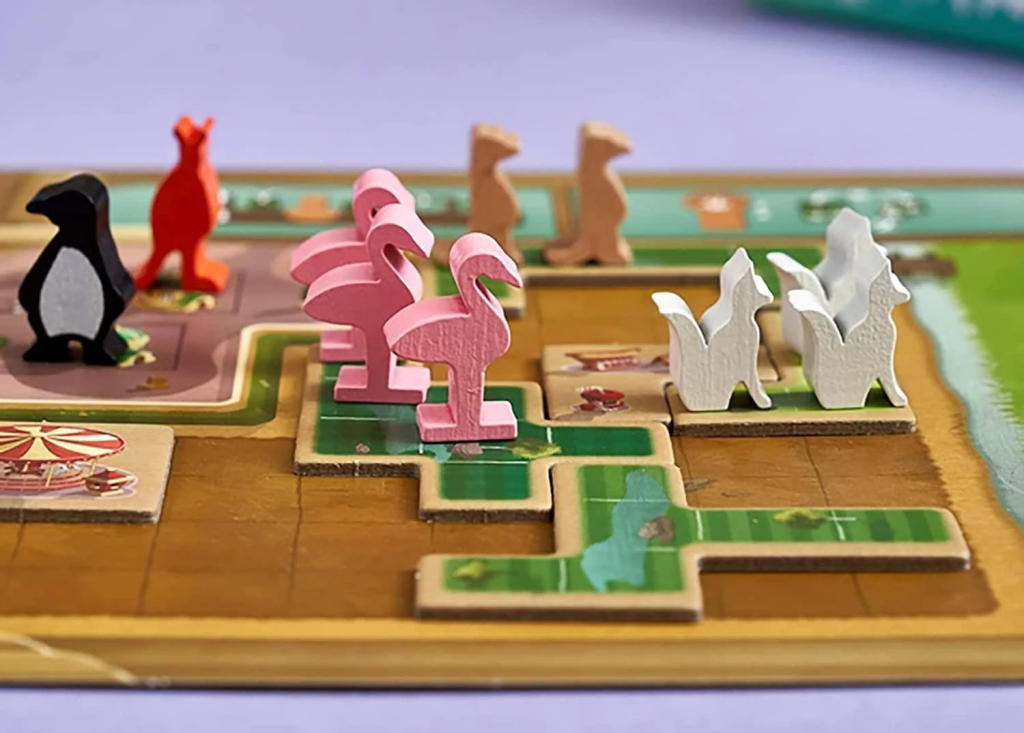
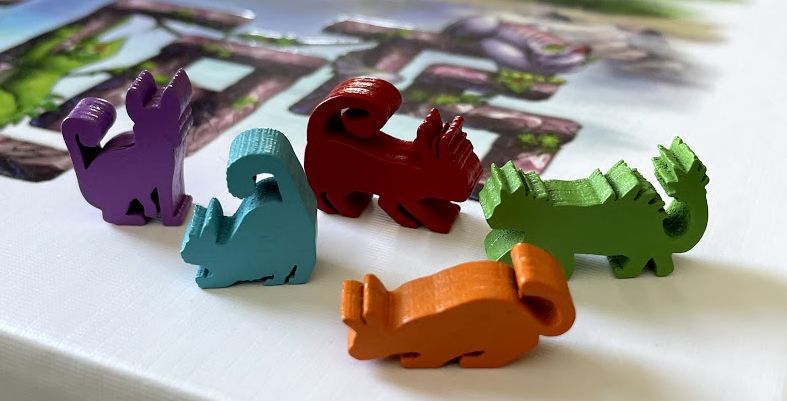
If you don’t own either of these games, look for others in your collection. Beyond just meeples, consider giving other game components a new life: coal, grain, bricks, or wood can gain sentience, serving as player meeples for your next game night.
And don’t forget the classics! Chess pawns, Risk armies, and Monopoly houses are all great options to support accessibility!
Option 2: Aftermarket Meeples
If, after scouring your game collection and not finding a great option, you need more inspiration, consider these alternatives.
MeepleSource.com. I enjoy having black, white, silver, and gold meeples handy “just in case,” as one of those colors always helps me distinguish my pieces from others. These typically cost less than 50 cents each. I recommend 20 meeples in two colors to cover most needs.

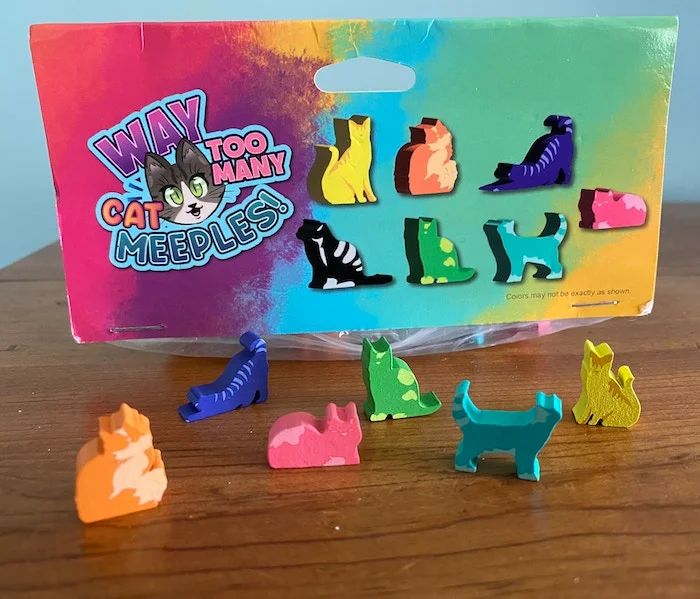
More Cats from Weird Giraffe Games. Carla Kopp put together a set of meeples as a fun add-on to Way Too Many Cats. This set has 20 cats in seven different colors (140 total)—meeting accessibility needs and then some!
Meet the Meeples: Self-advocacy
The next hurdle will be using your specialized meeples to help support your needs.
While I’ve found game groups (including strangers) more than willing to accommodate my accessibility needs, I still get nervous about sharing my color vision limitations. As much as I value advocating for myself and others, there are some nights when I would rather “just enjoy the game” like everyone else. This can put me in a tough mid-game situation, where I didn’t initially announce my needs, and later discovered that I’m having trouble.
So, when joining a new play group or starting a new-to-me game, I will quickly assess the components and make a quick mention of my needs. This allows me to partner with the group (especially the ‘teacher’ who likely knows the game well) to identify visual barriers. This may lead me to request a particular combination of player colors from the box. Other times, I will share my “Bring Your Own Meeples” concept and ask to use my bag of Agricola sheep in Lost Ruins of Arnak.
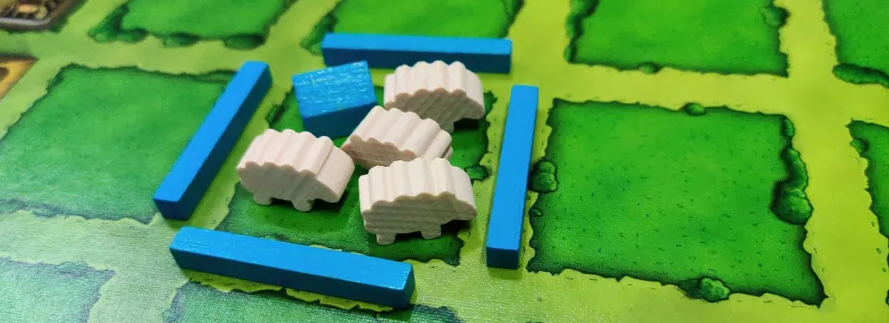
Image credits to the relevant board game publishers.

 Colorblind Games