
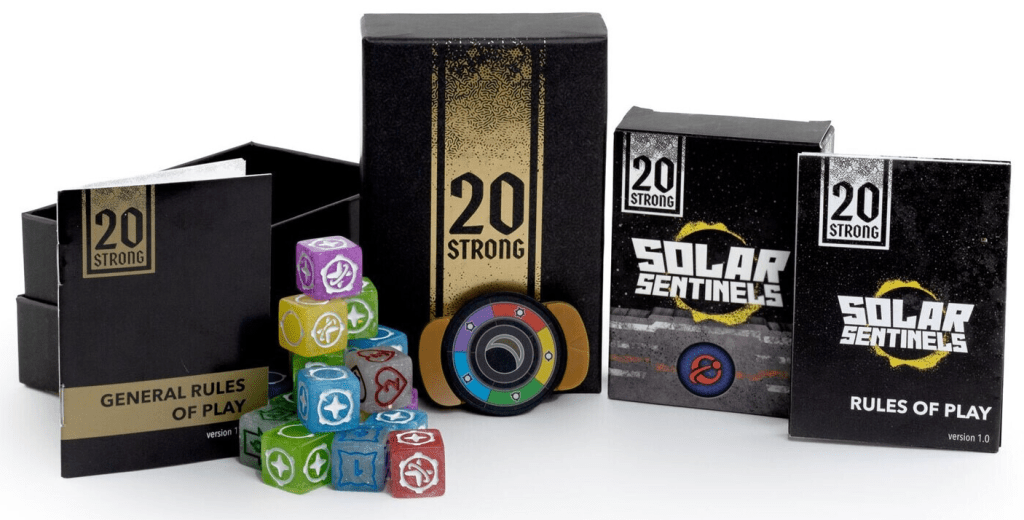
Chip Theory Games introduces 20 Strong, a compact gaming system that delivers engaging solo experiences across multiple universes. Designed by Josh J. Carlson, it offers an interesting approach to solo gaming with limited components. For this article, I reviewed three games from the series: Solar Sentinels, Too Many Bones, and Hoplomachus Victorum.
Gameplay
20 Strong is a deck-based, dice management game where players navigate through a series of increasingly difficult challenges using a clever system of 20 dice: 17 unit dice for primary actions, and 3 adjustable stat dice that control the player character’s key attributes.
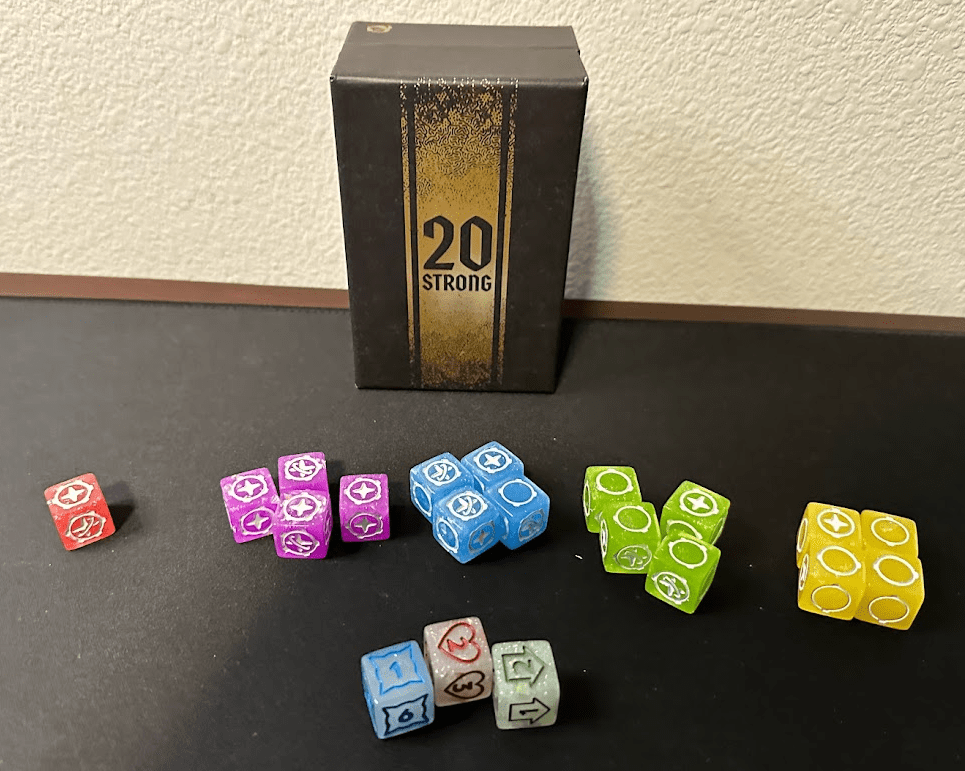
Each game revolves around progressing through a deck of encounters, confronting challenges like enemies or scenario-based tests. Your goal is easy to understand, but difficult to achieve: overcome obstacles by rolling enough successes, manage your resources carefully, and defeat a final boss.
The resource management game mechanism requires players to balance three stats: Hit Points, Strategy (controlling rerolls), and Recovery (returning dice to the available pool). This creates a “press your luck” opportunity to succeed in each situation while not exhausting too many resources.
The three games I reviewed use these same dice in various ways, keeping the games in the 20 Strong series familiar while providing variability.
- Solar Sentinels. Play as a sentinel fighting off an alien invasion. Some revealed aliens are mandatory to defeat, while others can be strategically avoided.
- Too Many Bones. Travel as a Gearloc through a miniature version of a Too Many Bones adventure, rolling dice and saving up misses in a backup plan. The deck includes a variety of tyrant encounters; each one skipped makes the final tyrant harder.
- Hoplomachus Victorum. Choose one of four heroes as the player character; then the others become opponents that must be defeated before facing the final boss.
Accessibility Review
Solo games require special accessibility accommodations since players are less likely to have another person available to support their needs. 20 Strong does a nice job addressing the needs of colorblind and low-vision gamers. Since many of the same components are used for each game, I’ve organized this section by components: Dice, Chip, and Cards.
THE Dice
Bad news first. The color palette is not great. With the unit dice, I struggled to distinguish blue from purple, and I found yellow and green to look similar. On the stat dice (red, blue, and green), the dark red and green colors used look nearly identical to me.
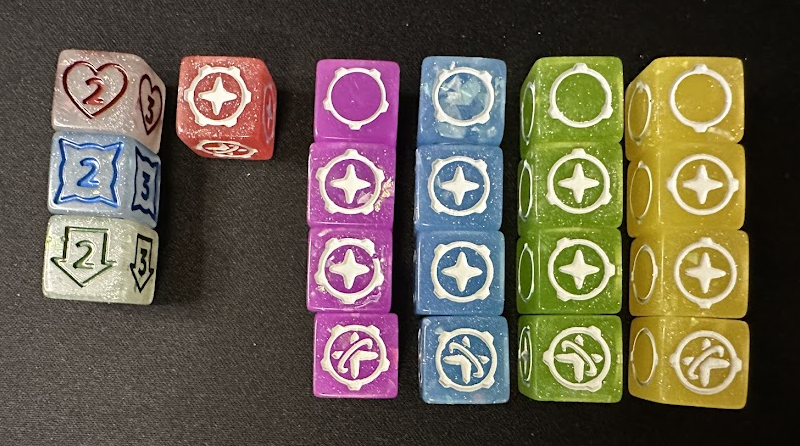
Good news! The game’s dice system demonstrates thoughtful graphic design for color vision accessibility by using double-coding. I can play 20 Strong without modifying the dice, because each die color features a unique design. This allows players with color vision challenges to distinguish between dice types through patterns and shapes.
- Unit Dice. The number of “tick marks” around the circle (ranging from 2 on the weakest yellow die to 6 on the strongest red die) matches the number of “hit” sides.
- Stat Dice. The symbols clearly indicate health (heart), strategy (square), and recovery (arrow).
THE CHIP
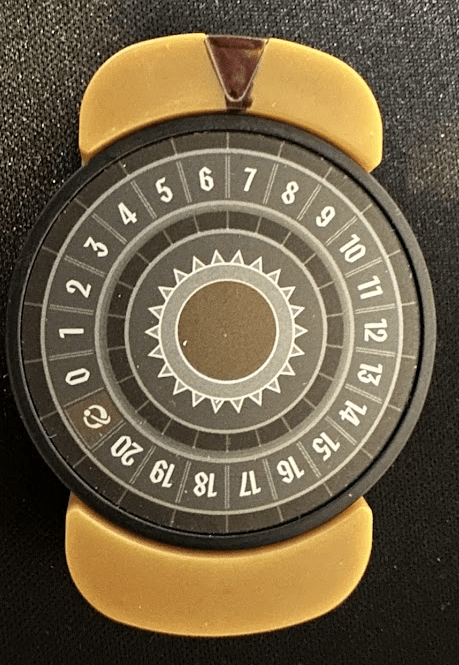
Chip Theory’s chip in 20 Strong acts as a dial for various purposes depending on the game. For example, in Solar Sentinels it tracks mission progress. It rests in a chip holder with a triangular notch pointing to the desired number or other information. Since the notch is the same color as the rest of the holder, I had trouble seeing this pointer clearly during gameplay.
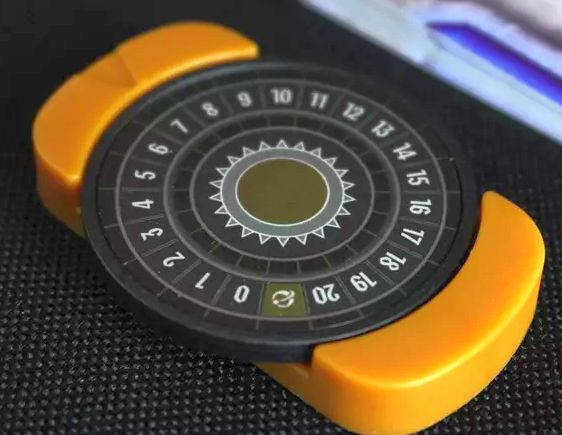
Modification. I made a small mod to my chip holder, using a sharpie to (rather clumsily) fill in the notch to clarify where it points.
THE CARDS
First, the cards are made of plastic instead of standard cardboard, which I dislike for handling and shuffling; I spilled cards more than once during my initial plays. While I imagine slipperiness will reduce over time, players with physical limitations handling game components might struggle with these.
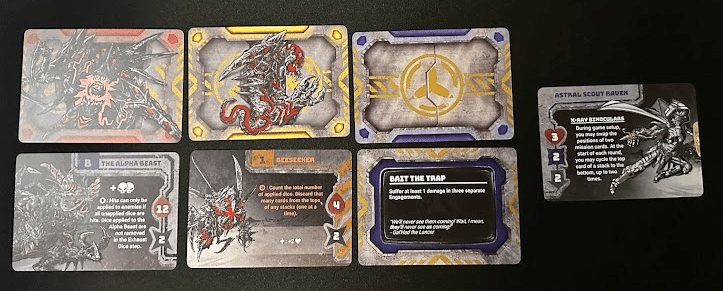
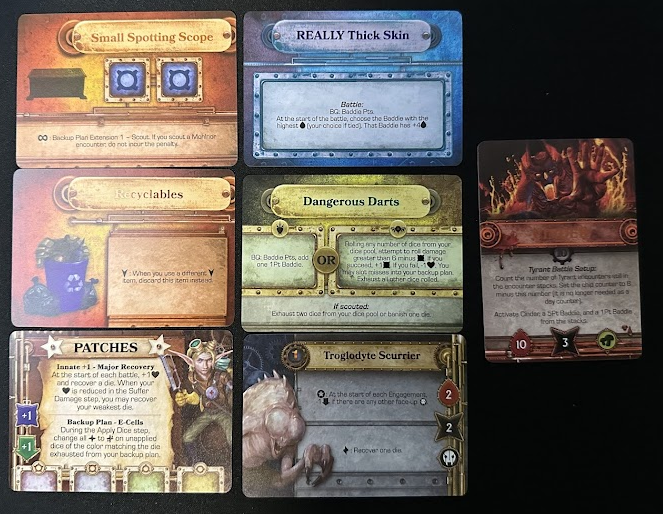
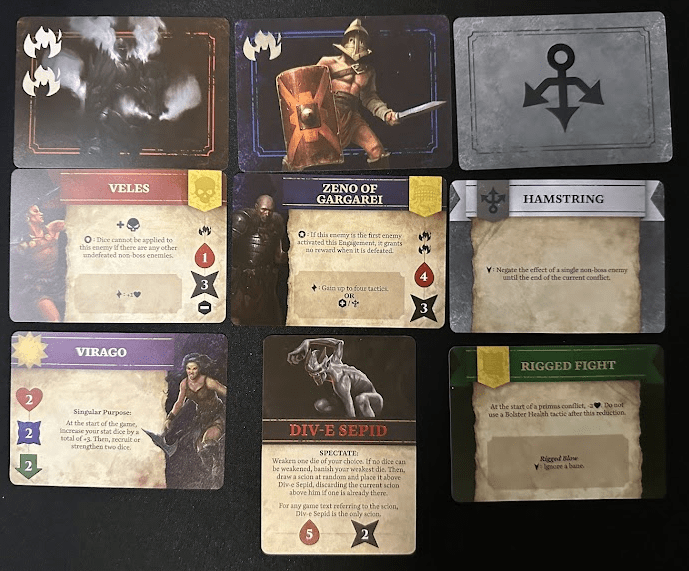
On the upside, the card art is beautiful, and the graphic design is clear. Icons are easy to understand and big enough to read, and most cards have good contrast between text and background. One small exception is Too Many Bones, which has some black-on-grey text I found more difficult to read, but still manageable.
Overall, I’m impressed with how the 20 Strong system cares for color vision and low vision needs on all components.
Wrapping Up
20 Strong offers a compact, strategic solo gaming experience through its innovative dice management system. Accessibility is quite good, led by the double-coding on dice that mitigates a potentially confusing color palette. 20 Strong is available on the Chip Theory website and wherever games are sold!
Image Credits: First image by Chip Theory games. First image of the chip in “The Chip” section by BGG user Meffy. All others by Brian Chandler.

 Colorblind Games