
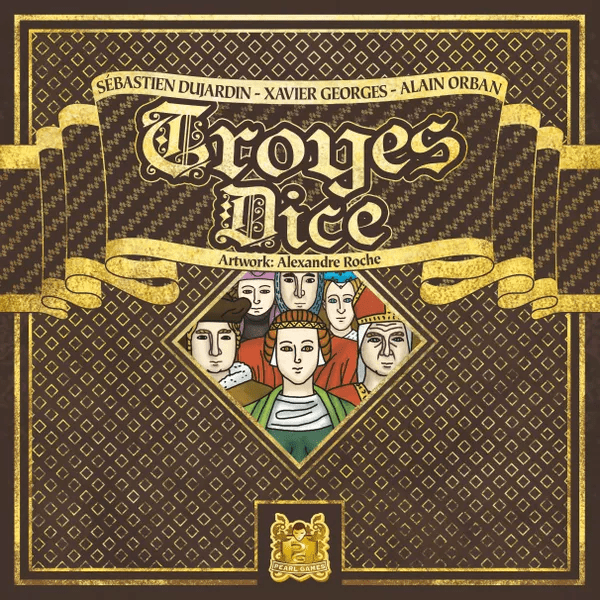
Troyes Dice, designed by Sébastien Dujardin, Xavier Georges, and Alain Orban, puts players in the City of Troyes during the Middle Ages, when society was organized around three orders: the nobles, civilians, and religion. Each player attempts to seize the best opportunities offered by the dice to leave their mark on the city!
Gameplay
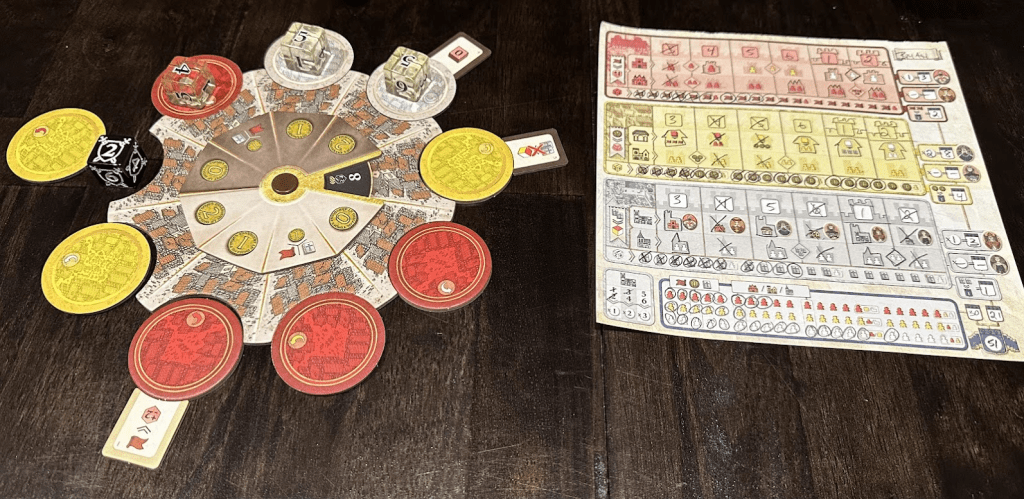
Troyes Dice is a roll-and-write, dice placement game with clever mechanisms and smooth gameplay. Each round, players select one die from a plaza tile and use it to fill in their personal score sheet. Actions include erecting prestige buildings, constructing work buildings, or gaining resources. Each turn, a black die is revealed, destroying a plaza; partway through the game, it also destroys an area on each player’s score sheet.
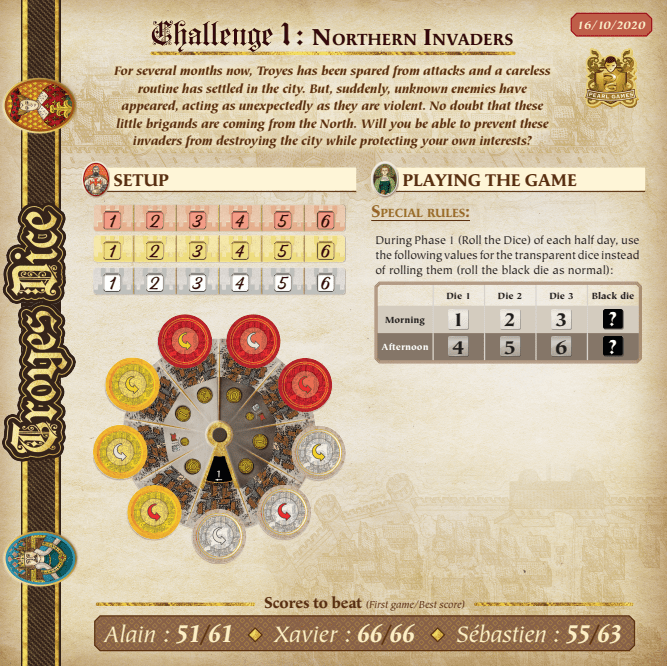
Because Troyes Dice is relatively simple, it could become same-y after several plays. To increase replayability, the publisher offered 11 challenges with unique setups and rules. These challenges extend the game’s lifespan and fully support solo play, which is excellent.
Accessibility Review
For Troyes Dice, the key to visual accessibility is a limited color palette (red, yellow, and white) and clear, decently sized icons on components and the player sheet.
Dice
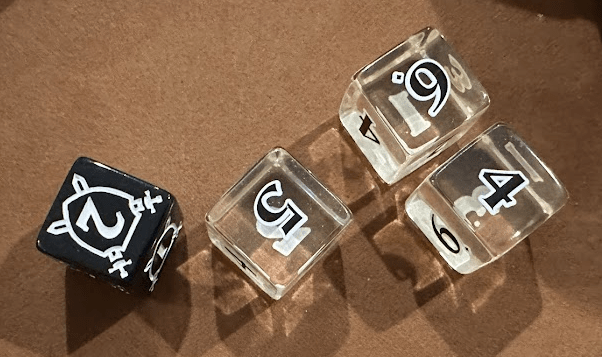
The dice are great! Primary dice are transparent for gameplay purposes (each die “becomes” yellow, red, or white based on where it sits), and the one black die (to wreak havoc) is easy to identify. The “6” even has an extra little dot to clarify that it’s not a “9” – an additional nod to accessibility.
Plaza Tiles
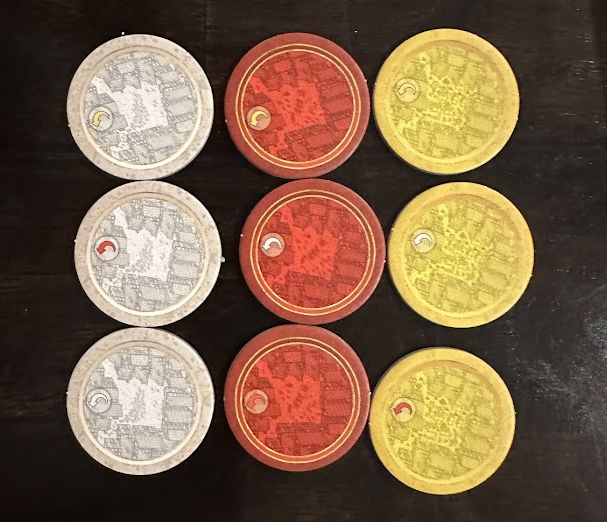
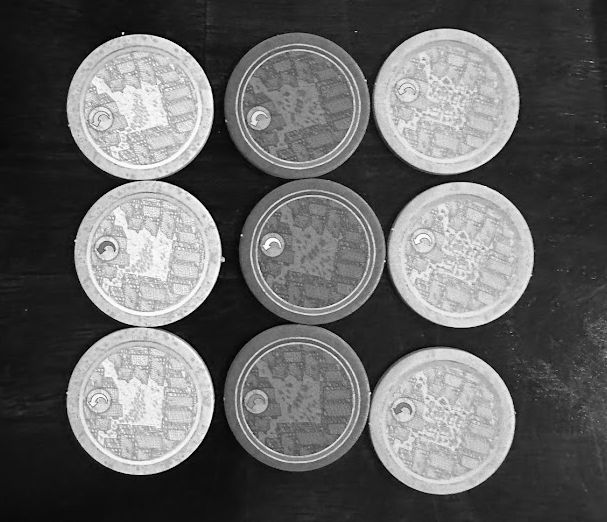
These gameplay components determine what a player can do each turn, so distinguishing among them is vital. Even though color is used without additional double-coding, the palette is so good that it works. As shown below with the slider, even in full greyscale, the three tones (light, medium, dark) are distinguishable.
Other Items
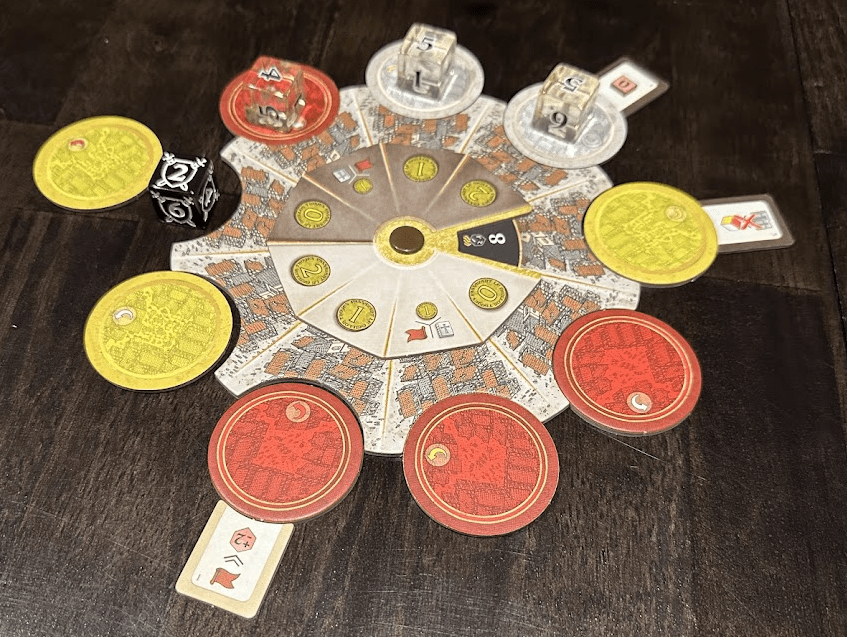
Troyes Dice includes an optional expansion, Banquets and Raids, which adds additional benefits and challenges throughout the game. These tiles were easy to read, and the rulebook provides a clear description of the icons.

When combined with the wheel for tracking turns, the components work quite well together.
Player Sheet
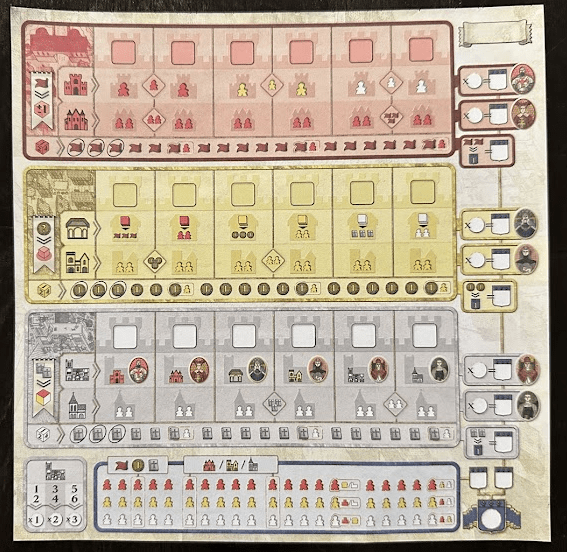
Roll-and-write games like Troyes Dice (see CBG reviews of Hadrian’s Wall, Cascadia Rolling) can sometimes suffer from cramming too much information onto the game sheets, resulting in very small icons. Graphic designers of Troyes Dice did an excellent job creating a strategic experience without teeny-tiny graphics.
Limiting the palette to three colors helps a lot here, as some very small meeples and other icons remain distinguishable.
Conclusion
If this type of roll-and-write game is on your radar, I highly recommend giving Troyes Dice a try. It’s easy to learn, smooth to play, and the optional tiles and add-on challenges provide plenty of replay value.
Visual accessibility is excellent, with the three colors (red, yellow, white) in three tones (dark, medium, and light), making the game playable for colorblind and low-vision players.


 Colorblind Games