
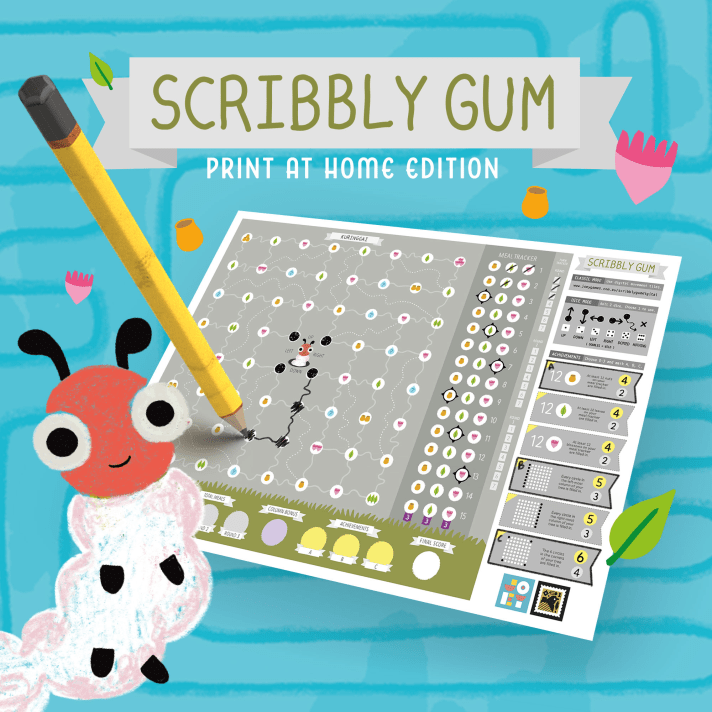
Scribbly Gum: Print at Home Edition is designed by Phil Walker-Harding with illustrations by Meredith Walker-Harding. It’s co-published by Joey Games and Postmark Games, and it plays 1-99+ in about 20 minutes. This is a reimplementation of Scribbly Gum (also by the Walker-Hardings, also from Joey Games) from 2023.
Gameplay
In this spatial puzzle, players act as baby moths burrowing through the bark of a scribbly gum tree to seek different types of food. Movement options (up, down, left, right, or special dotted paths) are randomized by rolling two dice (or, alternatively, using movement tiles).

Scribbly Gum is cute and very easy to learn. Alongside the Postmark-style 2d6 dice-rolling mode, Joey Games offers a “classic mode” using a digital version of the movement tiles from the original game. I found the dice mode much less restrictive (and almost too easy), compared to the digital movement tiles, as it often gives players two movement options. This occurs rarely with the digital tiles.
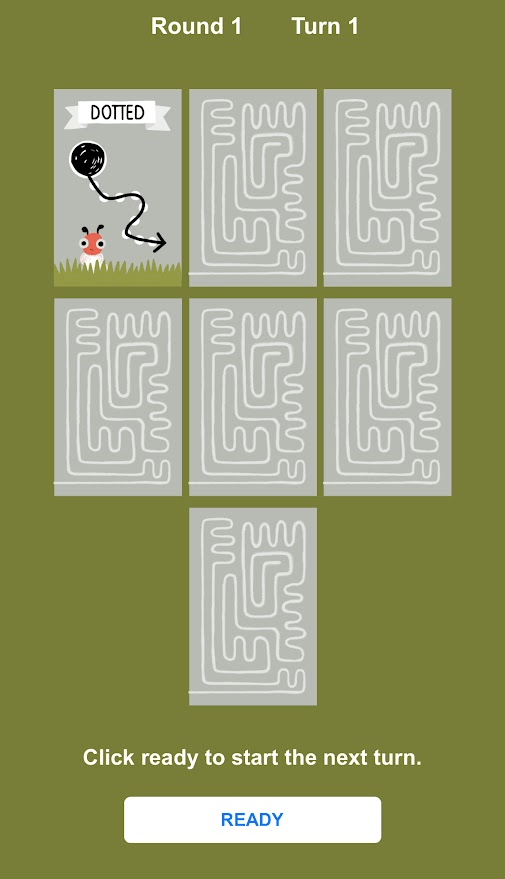
In both modes of Scribbly Gums I experienced interesting decisions and the welcome cascade of turn-extending bonuses. This is one of my favorite aspects of another game from Phil Walker-Harding, Super Mega Lucky Box.
Accessibility
Color Vision
Scribbly Gum does a nice job using double-coding (color and shape) for the food type icons.

Like Postmark’s other titles in their print-at-home series, the low-ink version of Scribbly Gum is 100% colorblind-friendly, as it can be printed in greyscale. While the full color version of this game looks great, I prefer the cleanliness and usability of the black-and-white versions of all Postmark Games.

The rulebook sometimes refers to colored areas on the game sheet (e.g., the yellow ‘achievements’ circle), but color wasn’t used as the lone identifying element, so I was able to figure it out. Removing color identifiers from the rules would further improve accessibility.
Low Vision
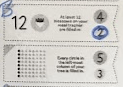
The fonts are a little small, especially when using my not-so-great home printer. This shows up most for the Achievements. But since the iconography is clear and logical, after squinting to read the scoring condition once, I’ve been able to remember by using only those icons. Low-vision players might need assistance during their first few plays.
Wrap Up
Scribbly Gum’s first few maps didn’t feel as brain-burning as other similar titles, but Postmark Games excels at free future content over time. For example, today I downloaded official map #5 of Aquamarine (Colorblind Games review), and dozens of fan-made sheets are available for all these games available online, since the publisher makes game assets freely available for players to create content.
By the way, Scribbly Gum costs only $6 USD, including all future content, making it one of the best deals in tabletop gaming. Everything is available on the Postmark Games website.
Disclaimer: Colorblind Games received a complimentary copy of Scribbly Gum for this review.
Image and Art Credits: Postmark Games, Joey Games. Game Photos: Brian Chandler

 Colorblind Games
One thought on “Colorblind Games Review | Scribbly Gum”